Ancestors (Egun) are more than those who share your bloodline.
They are the ones who have walked paths before you—those who loved, endured, created, prayed, and dreamed.
They exist as:
• Bloodline ancestors
(known and unknown)
• Spiritual ancestors
who guide and protect
• Lineage keepers of wisdom, healing, and tradition
Their presence is not distant.
It is woven into your breath, your body, your becoming.
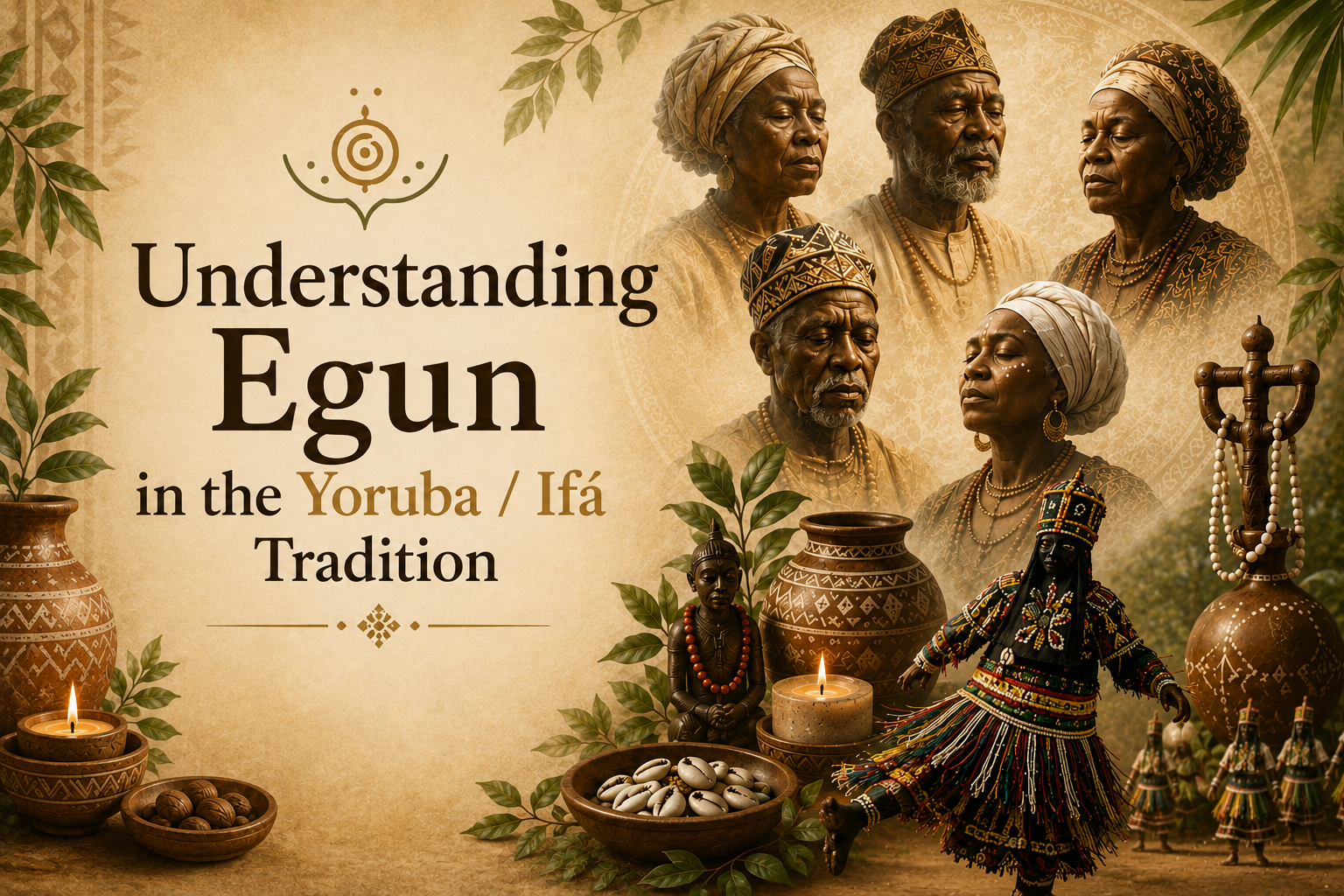
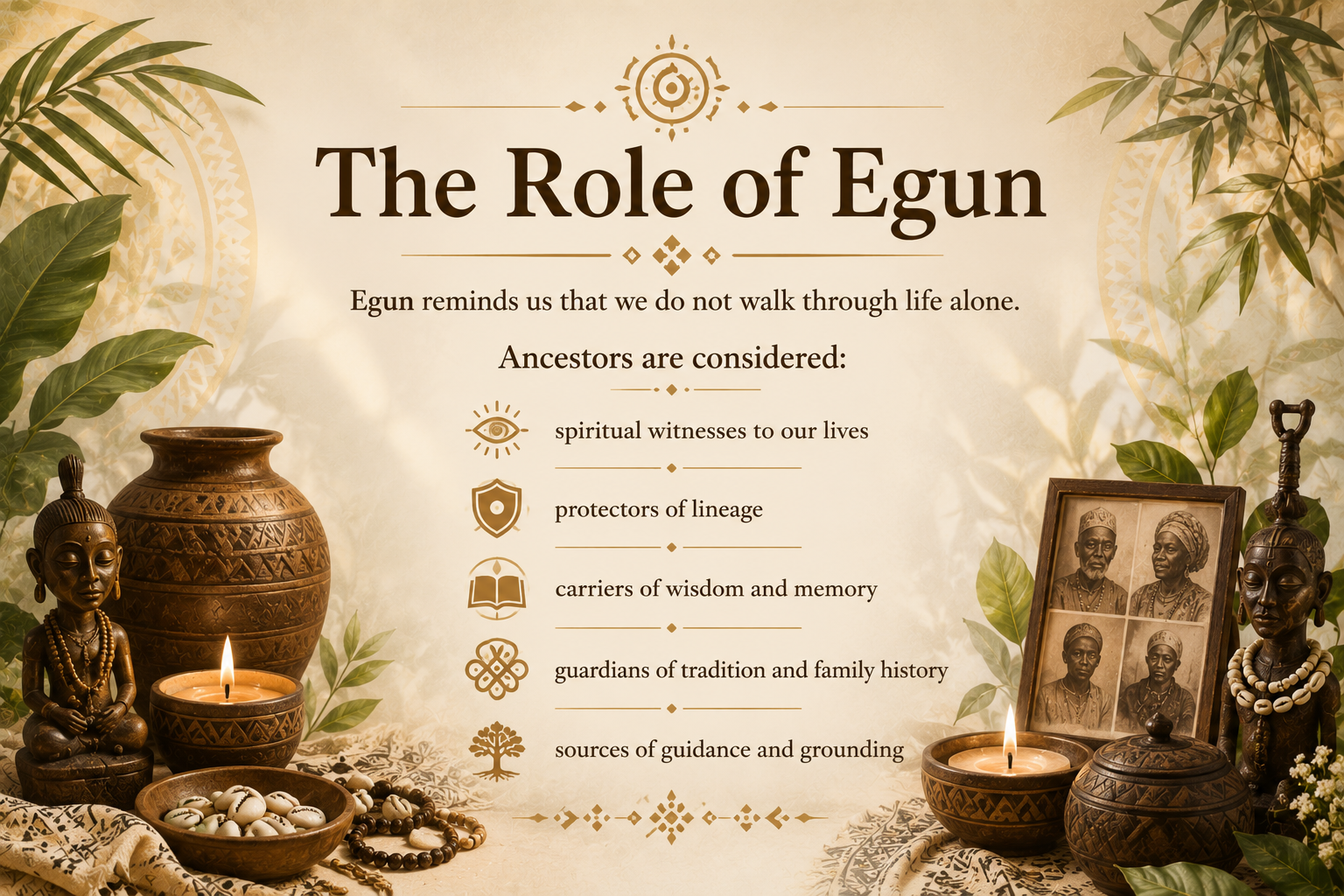
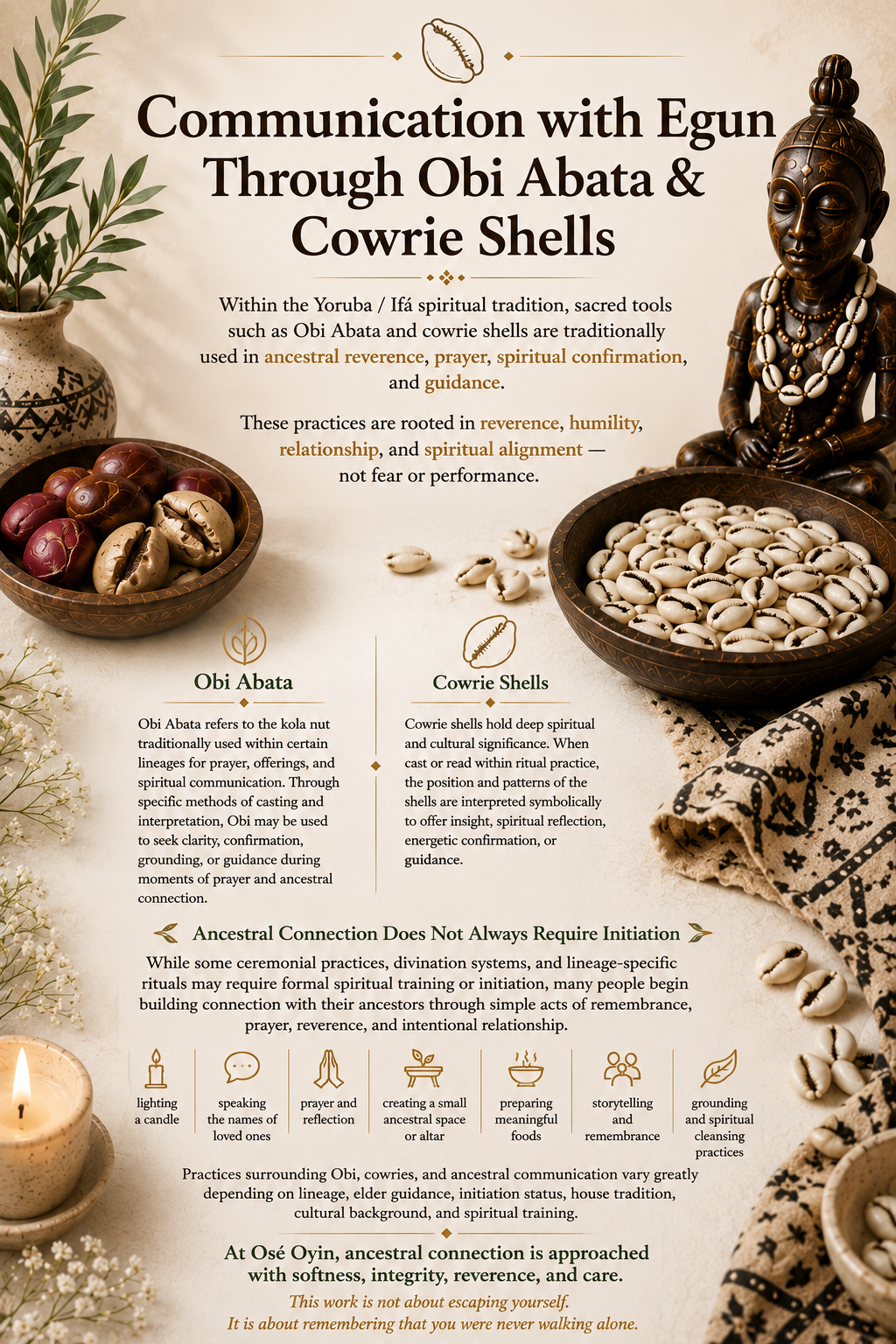
In the Yoruba / Ifá spiritual tradition, Egun (also spelled Egungun) refers to the honored ancestors—those who came before us and continue to exist spiritually beyond physical life.
Egun represents ancestral presence, wisdom, lineage, memory, protection, and continuity between the living and those who have transitioned.
Within the tradition, ancestors are deeply respected because they are understood to remain spiritually connected to the family and lineage. They are not worshipped as gods, but honored as elders, guides, and spiritual supporters who may offer wisdom, protection, correction, blessings, and remembrance.
Ancestors in the Yoruba Worldview
Ancestors are considered an important part of the spiritual ecosystem. Just as we inherit physical traits from those who came before us, we also inherit stories, values, strengths, lessons, and spiritual responsibilities.
The relationship with Egun is maintained through:
Prayer and remembrance
Offering gratitude
Honoring family lineage
Preserving traditions and stories
Living with integrity and good character (Ìwà Pẹ̀lẹ́)
What Ancestors Are Not
A common misconception is that ancestors are worshipped. In traditional Yoruba spirituality, ancestors are honored and respected, but they are not considered Orisha. Instead, they are revered members of the lineage who continue to guide and support their descendants.
Why Ancestor Veneration Matters
Ancestor veneration helps us:
Remember where we come from
Strengthen our connection to lineage
Receive wisdom from those who walked before us
Heal generational wounds
Cultivate gratitude and belonging
To honor Egun is to acknowledge that we do not walk alone. We are supported by the prayers, sacrifices, resilience, and love of those whose lives made our lives possible.
“The ancestors are not distant. They live in our memory, our blood, our stories, and our becoming.”